
The Ultimate Guide to Ultrafiltration (UF) vs. Reverse Osmosis (RO): Choosing the Right Water Solution for Your Budget and Environment
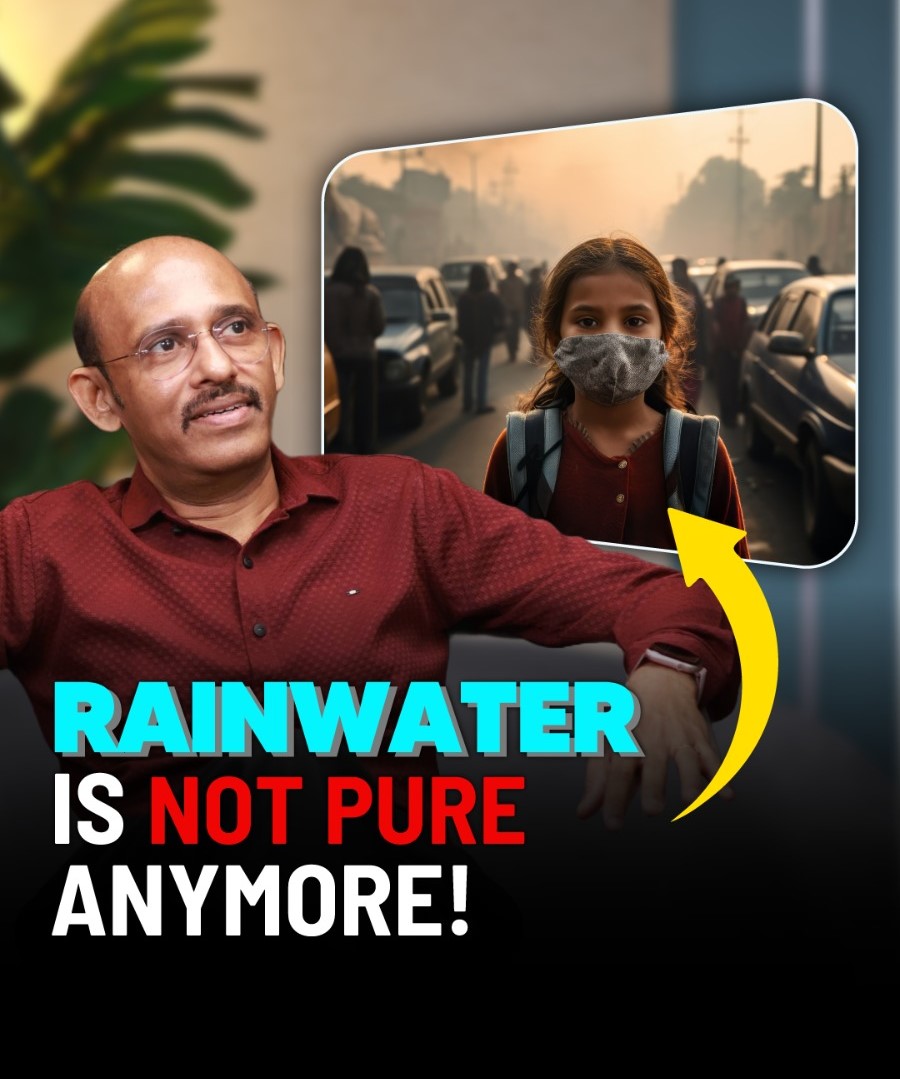
The traditional belief that drawing water from a deep, enclosed underground well guarantees perfect purity is a myth. A borewell doesn’t manufacture water; it acts as a passive storage basin for whatever flows downward from the surface over decades.
[Industrial Air Pollution] ➔ [Contaminated Rainwater] ➔ [Agricultural Pesticides & Fertilizers] ➔ [Borewell Leaching]
The Groundwater Crisis: How Rainwater Becomes Polluted
A common misconception is that drawing water directly from a deep underground borewell guarantees its purity. In reality, groundwater serves as a reservoir for everything that happens on the surface.
[Industrial Air Pollution] ➔ [Contaminated Rainwater] ➔ [Agricultural Pesticides & Fertilizers] ➔ [Borewell Leaching]
Atmospheric and City Pollution Interception
As raindrops pass through industrialised urban zones, they undergo interception. It washes down floating particulate matter ($PM_{2.5}$ and $PM_{10}$), sulfur dioxide, and nitrogen oxides produced by manufacturing plants and vehicular traffic. By the time it reaches the ground, it already has a chemical baseline of pollution.
Agricultural Runoff and Deep Soil Leaching
In rural sectors, farming communities, and peripheral city outskirts, intensive agricultural operations use massive volumes of synthetic fertilizers and chemical pesticides.
Commercial fertilisers load the soil with heavy concentrations of Nitrogen ($\text{N}$) and Phosphorus ($\text{P}$). When polluted rainwater flows over and through this treated topsoil, these chemical compounds dissolve, pass past root systems, and leach directly into deep underground aquifers.
When you pump this water up through a residential borewell, it brings along high turbidity, organic plant matter, and pesticide residues.
The Financial Dilemma: Why Reverse Osmosis Isn't for Everyone
When faced with complex chemical or bacterial groundwater pollution, standard residential advice often steers consumers directly toward installing a whole-house or point-of-use Reverse Osmosis (RO) plant. While RO is exceptionally effective at removing contaminants, it poses significant structural and economic hurdles for the average household.
The True Cost of Running a Residential RO System
High Initial Capital Expense: True whole-house RO systems require expensive, high-pressure booster pumps, specialized storage tanks, and robust structural frames, pushing initial setup costs into a premium tier.
Massive Water Waste: Reverse Osmosis relies on a cross-flow filtration process that constantly flushes a high percentage of incoming water down the drain to keep the membrane clean. For every litre of pure water produced, a traditional RO system can reject 2-3 litres of water, making it highly inefficient in water-scarce areas.
Intense Maintenance Cycles: The tight pore structure of an RO membrane makes it highly vulnerable to fouling by physical mud and silt, as well as scaling minerals. Homeowners must buy expensive pre-treatment filters and pay for routine chemical cleanings to keep the system from breaking down prematurely.
What is Ultrafiltration (UF) Technology?
If your laboratory water report shows that your raw groundwater does not exhibit extreme salinity or sky-high dissolved mineral salt levels, a whole-house Ultrafiltration (UF) system offers a brilliant, budget-friendly engineering solution.
Ultrafiltration uses bundles of thousands of hollow-fibre capillary structural membranes. These fibres feature microscopic pore ratings ranging from $0.01\text{ to }0.02\text{ microns}$. For context, this is up to 100 times smaller than the width of a human hair, creating a highly effective physical barrier against microscopic impurities.
The True Capabilities of Ultrafiltration
Complete Biological Barrier: Because pathogenic bacteria, coliforms, cysts, and protozoa are physically larger than $0.01\text{ microns}$, a UF fibre bundle physically blocks $99.9\%$ of dangerous biological pathogen contamination without needing harsh chemicals.
Suspended Chemical and Debris Capture: While UF allows dissolved, harmless liquid minerals to pass through, it traps physical sediments, suspended organic matter, and traces of pesticides bound to soil particles.
Zero Wastewater Waste: Unlike RO systems, which continuously discard water, an ultrafiltration system works via direct, dead-end filtration. Every single gallon of water that enters the UF housing comes out as clean water, achieving a $100\%$ recovery rate during regular filtration use.
Comparing the Technologies: UF vs. RO
To help choose the right system for your property’s infrastructure and budget, here is a breakdown of the differences between Ultrafiltration and Reverse Osmosis:
| Technical & Performance Feature | Ultrafiltration (UF) Systems | Reverse Osmosis (RO) Systems |
| Primary Target Contaminants | Microscopic bacteria, viruses, suspended silt, mud, and organic turbidity | Dissolved salts ($\text{TDS}$), heavy metals, arsenic, fluorides, and liquid chemicals |
| Pore Size Rating | $0.01\text{ to }0.02\text{ microns}$ (Micro-filtration) | $0.0001\text{ microns}$ (Hyper-filtration) |
| Mineral Retention Behavior | Retains natural, harmless alkaline minerals (Calcium, Magnesium) | Completely strips out all dissolved solids, requiring a remineralisation stage |
| Wastewater Footprint | Zero Wastewater during standard filtration operations | High reject water rates (up to $70\%$ discarded as waste stream) |
| Electricity Requirements | Operates cleanly on standard home line pressure (No booster pump needed) | Requires continuous high-pressure electric booster pumps to run |
| Upfront & Maintenance Costs | Very affordable setup with simple, budget-conscious filter replacements | Premium tier upfront investment with high long-term maintenance costs |
Whole-House Water Solutions: Managing Hard vs. Soft Water
To build a reliable whole-house filtration network, your equipment choices should align perfectly with your home’s unique water chemistry.
The Muddy Water Buster Approach
If your primary issues are physical mud, agricultural soot, reddish iron sediment, or seasonal bacterial blooms, an inline system like the Water Sparks Muddy Water Buster series on Amazon delivers exceptional value. These systems use heavy-duty, food-grade stainless steel housings that bolt directly onto your property’s main incoming utility riser line. They scrub the water clear of physical debris and pathogens before it ever reaches your overhead storage tanks, providing clean water to every shower, sink, and washing machine without lowering your home’s water pressure.
[Raw Borewell Intake] ➔ [Ion-Exchange Resin Softener] ➔ [Stainless Steel UF Core] ➔ [Clean Scale-Free Water Outflow]
Handling High Hardness and Mineral Scale
It is critical to remember that Ultrafiltration cannot alter dissolved minerals or reduce water hardness. If your borewell test shows high levels of calcium ($\text{Ca}^{2+}$) and magnesium ($\text{Mg}^{2+}$) ions, your plumbing is at risk of scaling.
To solve this without stepping up to an expensive, water-wasting RO system, pair an automated iron-exchanger resin softener tank right alongside your ultrafiltration system. The softener exchanges the hard-scaling minerals for non-binding sodium ions ($Na^+$), while the UF unit screens out particulate matter and biological pathogens. This dual setup gives you scale-free, crystal-clear water across your entire home at a fraction of the cost of RO.
Does a ultrafiltration system require manual backwashing to keep from clogging?
Yes, but the process is incredibly simple. Because ultrafiltration traps all mud and bacteria on the outside of its hollow fibres, it needs to be flushed periodically. Most residential systems feature a simple manual multi-port valve or an automated timer that reverses the water flow for a few minutes, flushing accumulated sediments out through a dedicated drain line and completely restoring the system’s filtration efficiency.
How often do the hollow-fiber UF membranes need to be replaced?
Under normal household use with regular backwashing, a high-quality whole-house ultrafiltration membrane will operate efficiently for 2 to 3 years before needing replacement. This longevity makes it significantly cheaper to maintain than standard sediment or carbon cartridges.
Can I safely drink water that has passed through a UF system?
Yes, provided that your raw input water’s Total Dissolved Solids (TDS) level is already within a safe, drinkable range (typically below $500\text{ ppm}$). The UF membrane physically blocks bacteria and biological cysts, rendering the water microbially safe to drink while preserving the water’s natural, healthy mineral content.
Summary & Architectural Insight
You do not need to invest in an expensive Reverse Osmosis system if your home’s water doesn’t suffer from high salinity or a severe TDS problem. By diagnosing your water quality through a certified laboratory assay, you can avoid over-engineering your setup. If your primary goals are removing agricultural runoff, sand, mud, and bacteria, a whole-house ultrafiltration system delivers premium protection and zero water waste, keeping your household safe and your utility costs low for years to come.