
TDS in Water Explained: Why Salt Levels Matter for Your Health & Home
Understanding what’s really in your drinking water is more important today than ever—and one of the most significant indicators of water quality is TDS, or Total Dissolved Salts. TDS determines how salty, heavy, or mineral-rich your water is and directly influences your family’s health and the condition of your home’s appliances. While some minerals are necessary for the body, excess salt can cause long-term health complications, damage plumbing, shorten appliance life, and even affect the taste of your water. As explained by Mr. Manohar DM, in this article, we’ll break down exactly what TDS is, why it matters, and how a properly filtered system—with support from Hydrodoc+—can help keep your water safe, clean, and balanced every single day.
What Is TDS and Why Should You Care?
TDS (Total Dissolved Solids) refers to the complete amount of minerals, salts, and dissolved impurities present in your water. These include essential elements such as calcium and magnesium, sodium, potassium, sulfates, chlorides, and others, all naturally occurring ions. These minerals are necessary in determining the taste, hardness, and overall quality of your water. While the human body benefits from moderate levels of specific minerals, excessively high TDS levels can raise serious concerns.
High salt content can affect kidney health, increase the body’s stress, and alter the taste of drinking water. On the other hand, high TDS can deposit stubborn stains on tiles, reduce appliance efficiency, block pipes, and shorten the life of a water heater or filter. According to expert guidance from Mr Manohar DM, understanding TDS allows you to select the right filtration system and ensures health and home protection with the right support from Hydrodoc+.
Good Minerals vs. Excess Salts
Your body requires essential minerals such as calcium and magnesium for strong bones and good muscle function, among other things, for overall health. Such minerals, when present in the right amounts, actually help improve water quality and even contribute to health. However, sodium, chloride, and other salts may pose problems when their content exceeds safe limits. High intake of sodium from drinking water may raise blood pressure, put extra strain on the kidneys, and increase the risk of heart conditions. High levels of chloride may cause dehydration and disturb the body’s natural electrolyte balance.
Apart from health problems, high TDS water affects daily comfort. Salty water usually tastes metallic or bitter and is not good enough to drink every day, nor is it suitable for cooking. Soon, this different taste becomes almost a sure sign that your water needs some attention. As highlighted by advisor Mr. Manohar DM, understanding the fine line between essential minerals and harmful salts is important, enabling healthy, hygienic, and good-tasting water for your family—with complete support from the Hydrodoc+ team.
Real-World TDS Examples You Should Know
Sea water contains nearly 40,000 ppm of dissolved salts, making it extremely salty and entirely unsuitable for drinking without advanced desalination. By comparison, the water from a borewell is usually around 1,000 ppm, as it picks up many minerals as it passes through deep underground rock and soil. This is the reason why borewell water tastes hard or salty and can cause scaling in appliances. On the other end of the scale, rainwater has close to 0 ppm, since it results from natural distillation through evaporation and, when it has not yet reached the ground or any other contaminants, constitutes the purest form of water available.
These differences highlight how drastically TDS levels can vary from one source to another. The taste, mineral content, and suitability of water for household use differ significantly based on its source. As explained by Mr Manohar DM, understanding this variation will help you select the right filtration system to ensure the water you drink is safe and pleasant—with the right recommendation from Hydrodoc+.
WHO Guidelines for Safe Drinking Water
According to the WHO, drinking water with TDS levels above 2,000 ppm is unsafe for human consumption. At such high levels, water contains excessive amounts of salts and minerals that the body cannot process efficiently. When these salts accumulate, they can place tremendous stress on vital organs—especially the kidneys, which filter excess minerals. Over time, this can result in kidney stones, reduced kidney function, and other serious complications.
High TDS water can also increase sodium intake, increasing the chance of high blood pressure, heart strain, and fluid retention. Such risks are particularly prevalent among people suffering from conditions like hypertension, diabetes, and cardiovascular disease. Even before reaching hazardously high levels, high TDS can cause digestive problems, dehydration, and an unpleasant taste. This is why Mr Manohar, DM, recommends proper TDS testing, which will indicate whether your drinking water is safe, healthy, and suitable for daily use—with guidance and solutions provided by Hydrodoc+.
Why TDS Matters for Your Home Appliances
High TDS water is one of the biggest reasons behind scale buildup in geysers, washing machines, pipelines, and taps. Excess calcium, magnesium, and other dissolved salts within water mineralize, settle, and harden as they are heated or left to dry. This can eventually create thick layers inside appliances, significantly reducing efficiency and, over time, leading to higher energy consumption. It takes longer for geysers to heat up, washing machines can’t clean properly, and pipelines gradually narrow due to mineral deposits, which later cause low water pressure and frequent blockages.
The impact doesn’t stop there. High TDS water also leaves white, chalky stains on tiles, bathroom fittings, showerheads, and kitchen sinks. Utensils and glassware often come out cloudy even after washing, making daily cleaning frustrating. These stubborn marks require constant scrubbing and special cleaners, which add to your maintenance costs and effort. In the long run, the buildup from high TDS not only damages your expensive appliances but also deteriorates the hygiene and appearance of your home. As noted by Mr Manohar DM, understanding and controlling TDS levels is key to avoiding these recurring problems—and the Hydrodoc+ team provides the proper filtration support to manage them.
How to Check TDS at Home in 10 Seconds
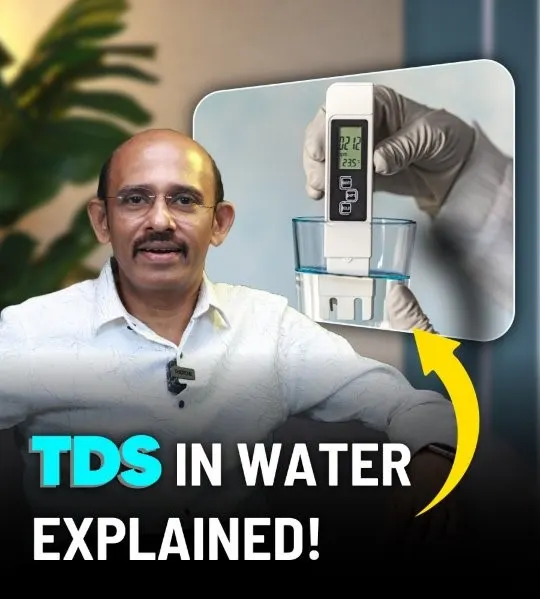
A simple digital TDS meter is one of the easiest tools for checking your home water quality. With just a quick dip of the probe, it gives you an instant reading of the Total Dissolved Solids present in your water—no lab visit or complicated process needed. This small device helps you understand exactly what you’re consuming and whether the mineral and salt levels fall within a safe range.
Regular testing is essential, as water quality can change due to seasonal variations, borewell depth, pipeline conditions, or municipal supply fluctuations. By monitoring your TDS levels regularly, you will be able to identify early signs of an increase in salt content, trace contamination, and know when it is time to service or upgrade the filtration system. A TDS meter takes the guesswork out of water safety, putting you in a better position to make informed decisions to protect your health and your home. This is a key practice recommended by Mr. Manohar DM and the Hydrodoc+ team.
Choosing the Right Filtration System for Your TDS Level
For moderately elevated TDS levels, basic sediment or carbon filters may provide some improvement by removing visible impurities and enhancing taste slightly. However, none of these filters can reduce dissolved salts, so they are pretty useless when TDS levels are genuinely high. Once your water exceeds 500 ppm, you will definitely need an RO system, as it is specifically designed to remove excess salts, minerals, and dissolved contaminants that ordinary filters cannot handle.
RO water purification is based on the principle of forcing water through a semipermeable membrane that blocks sodium, chloride, heavy metals, and other dissolved solids, reducing TDS to levels that are safe and palatable. This dramatically improves the water’s taste, making it much smoother and more pleasurable to drink. It also makes it safer because reduced consumption lessens the burden on your kidneys and lowers the long-term risk associated with salt intake. Beyond drinking, RO-treated water is better for cooking, easier on appliances, and helps prevent scale buildup in kettles, coffee makers, and water heaters. These recommendations are consistently emphasized by advisor Mr Manohar DM, who works alongside the Hydrodoc+ team to guide families toward the correct filtration choice.
Ensuring Safe Water for Your Family
Understanding TDS is a crucial step toward making informed decisions about home water treatment. Awareness of the levels of dissolved salts and minerals in your water will help you choose between a simple TDS filter for slightly elevated levels and a complete RO system for high TDS water. A proactive step like this will help prevent long-term health issues such as kidney strain, high blood pressure, and other complications related to excessive salt consumption.
Clean, balanced water protects not only your health but also your household appliances from scale buildup in geysers, washing machines, pipelines, and taps, thereby reducing maintenance costs and prolonging their lifespans. It also ensures better-tasting water for drinking and cooking, adding to the daily routine of pleasures. In fact, safe, properly treated water improves hygiene, prevents staining of tiles and utensils, and helps the whole family lead a healthier lifestyle. Checking and acting on TDS levels are not only about safety but also about improving everyday living, sustaining home efficiency, and delivering peace of mind that the water both you and your loved ones drink is clean and wholesome—exactly what Mr Manohar DM and the Hydrodoc+ team help families achieve.