
The Ultimate Asset of the Future: Why Pure Water is Your Family’s Greatest Inheritance
When we think about passing down assets to the next generation, our minds instantly go to the classics: luxury cars, modern houses, and appreciating plots of land. For generations, these have been the gold standard of financial security, passed on sequentially from parent to child.
However, an irreversible global shift is occurring right before our eyes. Instead of real estate or stock portfolios, the single biggest future demand will be for an asset we currently take for granted: access to pure water.
If we don’t fix how we manage, filter, and conserve this critical resource today, our children won’t be worrying about their real estate portfolios—they will be fighting for clean water. Here is a deep dive into why pure water is the ultimate future asset, how our current habits are destroying it, and the technology needed to save it.
The Crisis: Why pure Water is Vanishing
The main reason pure water is poised to become incredibly scarce—and vastly valuable—stems from a dual failure: macro-level pollution and micro-level domestic waste.
[Industrial Air Pollution] ➔ [Contaminated Rainwater] ➔ [Agricultural Pesticides & Fertilizers] ➔ [Borewell Leaching]
Macro-Level Industrial Pollution
Globally, heavy manufacturing facilities, chemical plants, and fast-paced industries discharge millions of gallons of toxic, untreated wastewater into public waterways daily. This industrial sludge seeps through the topsoil, eventually contaminating the deep underground aquifers that supply city borewells.
Micro-Level Domestic Complacency
While it is easy to point fingers at major corporate factories, the secondary crisis is happening right inside our own homes. Millions of citizens unintentionally waste gallons of municipal and well water every single day through unmonitored home processes.
The Micro-Crisis: Everyday Domestic Waste
[Unmonitored Tap Drip] ➔ [Underground Tank Overflow] ➔ [Toilet Flush Leak] ➔ [Thousands of Gallons Wasted Daily]
Most homeowners assume that major water shortages are exclusively caused by lack of rainfall or outdoor droughts. However, massive water loss frequently happens inside the home through minor structural failures.
The Overlooking of Minor Drips: A tiny, slow drip from a faulty kitchen faucet or garden tap is often ignored because it doesn’t immediately spike the water bill. Over the course of weeks, that single slow drip can waste hundreds of gallons of treated water.
Unchecked Toilet Tank Leaks: Malfunctioning flapper valves in toilet tanks allow clean water to run silently down the drain line. Because this leak is quiet and hidden, it can go undetected for months.
Overhead Tank Overflow: Many homes still rely on basic manual pumps to fill their overhead water storage units. Without automatic cutoff sensors, thousands of gallons of pure water spill over the sides before anyone notices.
The Invisible Threat: Multi-Apartment Complexes
The waste problem grows exponentially when looking at modern high-rise buildings and residential communities.
The Apartment Complexity: In a large apartment complex with 600 to 700 units, tracking individual water usage is nearly impossible without specialized infrastructure.
If even 10 to 20 apartments have a leaky toilet flush, a dripping faucet, or bad balcony pipe seepage, the entire community suffers. Thousands of gallons of community water disappear daily.
Because the cost of water is typically split evenly among all residents via a flat maintenance fee, individuals have little incentive to fix small leaks or cut back on their usage.
The Solution: Infrastructure and Auditing Tools
To tackle widespread domestic water waste, property owners must move away from guesswork and embrace data-driven management tools.
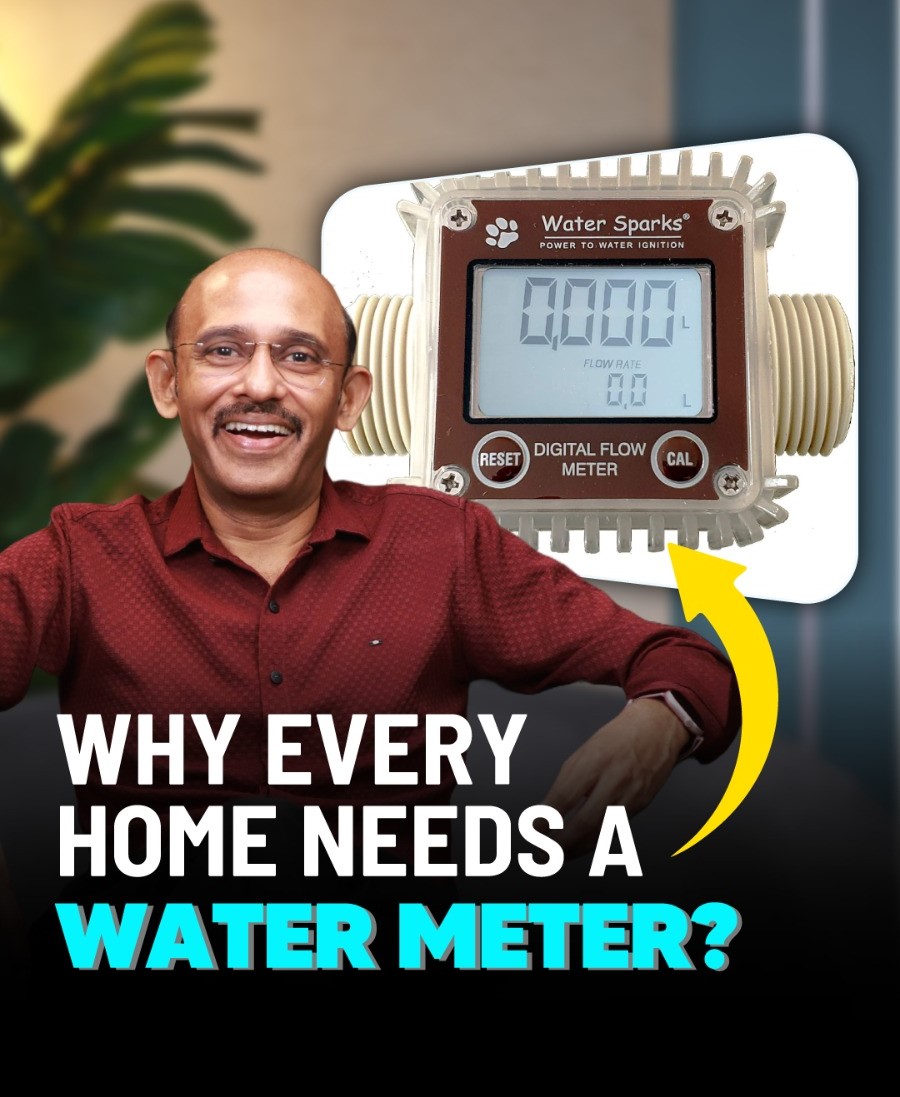
The Power of Individual Smart Pure Water Meters
The most effective way to eliminate residential waste is to install dedicated, high-precision smart water meters in every home or apartment unit.
When consumers can see their exact real-time consumption data, their daily habits change instantly. Digital meters allow property managers to identify exactly which units have internal plumbing leaks by detecting atypical, constant overnight water flow.
Comprehensive Whole-House Filtration
Measuring your water consumption is only the first step; ensuring the incoming water is safe and usable is equally critical. Integrating point-of-entry treatment systems—such as industrial-grade sand filters, iron removers, or advanced ultrafiltration systems from brands like Water Sparks—protects your home’s plumbing from scale and sediment while ensuring clean, safe water flows from every tap.
The Technology Matrix: Water Meters vs. Water Audits
To help building managers choose the best conservation strategy, here is a comparison of current tracking technologies:
| Monitoring Feature | Mechanical Water Meters | Digital Smart Meters (IoT) | Professional Water Audit Panels |
| Data Capture Frequency | Manual monthly reads required | Real-time continuous tracking | One-time diagnostic assessment |
| Leak Detection Speed | Very slow (takes weeks to notice) | Instant (notifies via automated alert) | Diagnostic only (identifies active issues) |
| User Accountability | Moderate billing accuracy | High individual responsibility | Community-wide overview |
| Upfront Setup Investment | Budget-friendly entry point | Premium technology investment | Low-cost analytical service |
| Primary System Value | Basic aggregate consumption math | Pinpoints hidden toilet/faucet leaks | Reveals major structural line breaks |
Conclusion: Building a Water-Secure Legacy
Leaving your children a secure future requires looking beyond traditional financial investments like houses and cars. If the water supply to those properties is polluted or completely depleted due to neglect, the assets’ financial value disappears.
True forward-thinking legacy planning means investing in intelligent conservation infrastructure today. By installing smart water meters, fixing household leaks immediately, and utilising advanced whole-house filtration, we can ensure the next generation inherits a sustainable, water-secure world.