
Don’t Blindly Install a Water Softener: The Ultimate Guide to Residential Water Testing and Filtration System
Many homeowners jump straight into buying expensive filtration equipment without understanding what is actually coming out of their taps. Blindly installing a water softener or generic filter based on guesswork or a neighbour’s recommendation can lead to thousands in wasted capital, ruined plumbing, and untreated water hazards.
Real water security requires an engineering-first mindset: test your source, identify the specific contamination profile, and build a targeted solution.
The Danger of Blind Filtration Purchases
When planning a new home build or upgrading utility infrastructure, many people focus entirely on architectural design, interior aesthetics, or electrical layouts. Water infrastructure is routinely treated as an afterthought. When water quality issues inevitably emerge, the standard knee-jerk reaction is to immediately call a supplier and order a whole-house water softener.
This “one-size-fits-all” approach to water management systems can backfire severely. Water chemistry varies completely depending on geographical location and extraction methods.
A filtration system designed to strip out dissolved calcium hardness is completely useless against issues like heavy metals, industrial chemical runoff, bacterial blooms, or high turbidity. Before any equipment is specified, purchased, or plumbed into your mainline, you must perform a comprehensive lab-certified water assay.
Why Crystal Clear Water Can Still Be Dangerous
One of the most dangerous myths in residential plumbing is that clear, odour-free water is safe water. Human senses are completely incapable of detecting some of the most destructive contaminants found in municipal mains and deep groundwater wells.
The Hidden Contaminants Lurking in Groundwater
High Dissolved Salt Content (Total Dissolved Solids): High TDS levels make water taste bitter or brackish and corrode plumbing fixtures from the inside out, even if the water looks clean when poured.
Heavy Metals: Elements like Arsenic, Lead, and Cadmium are completely colourless and odourless, but they cause severe systemic health complications over long-term exposure.
Microbial and Biological Activity: Cryptosporidium, E. coli, coliform bacteria, and viral strains readily infiltrate broken municipal water distribution systems or unhygienic storage sumps. They reproduce silently without altering the water’s transparency.
Without laboratory testing metrics, buying a residential water filter is purely a guessing game.
The 1.5 Lakh Rupee Hard Water Mistake
The critical importance of testing is perfectly illustrated by a recent real-world case handled by the engineering team at Water Sparks.
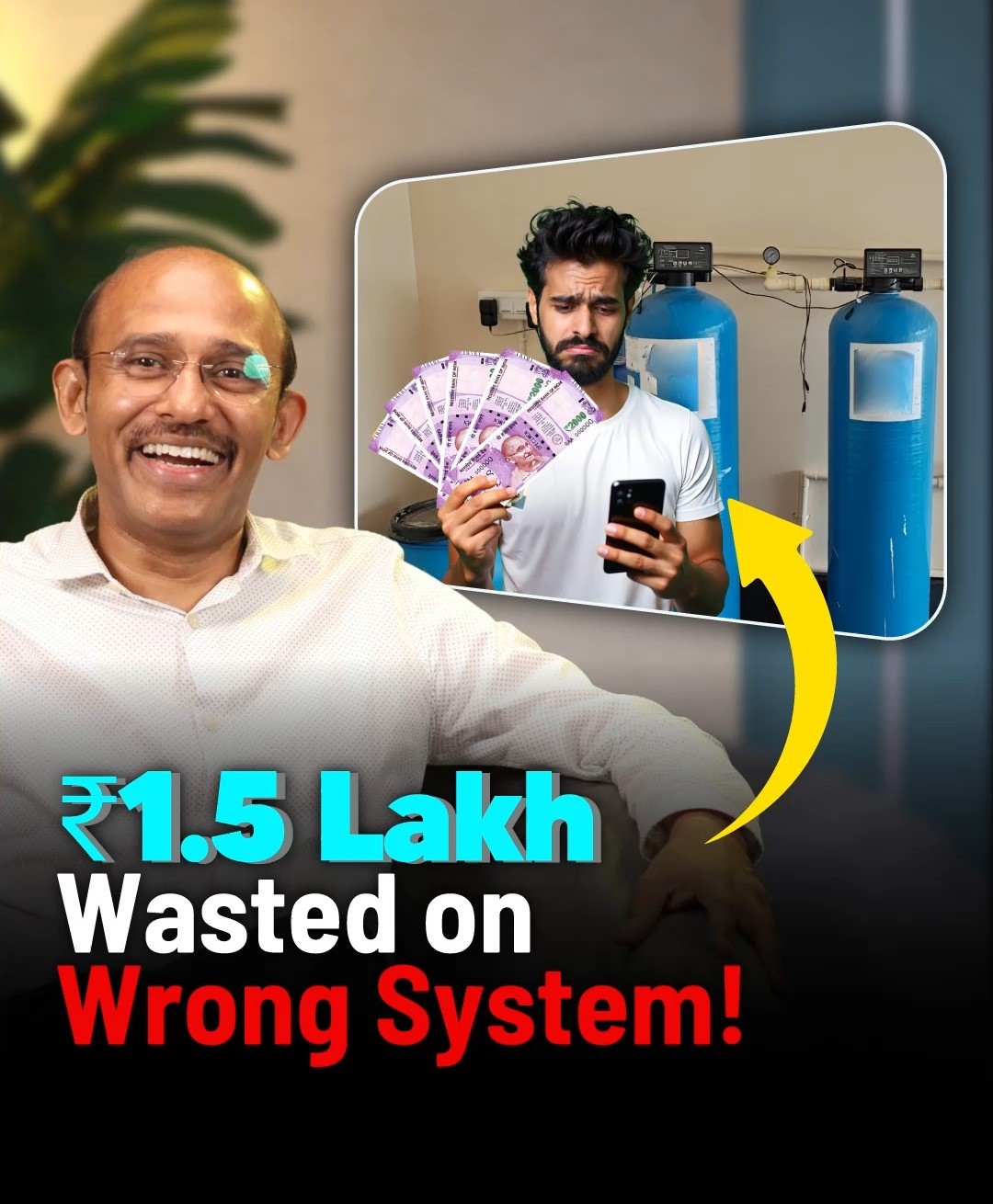
A homeowner skipped the testing phase and spent nearly 1.5 Lakhs ($150,000\text{ INR}$) to buy and install a premium whole-house iron-exchange water-softening plant along with an under-counter kitchen purifier. They assumed their groundwater supply was simply “hard water”.
The result was failure while using the wrong system
Immediately after installation, the water coming out of the taps developed a foul, rotten-egg odour and a distinct, yellowish-brown discolouration. The customer reached out to the initial equipment installers, but they offered no solutions
When the Water Sparks laboratory engineers collected samples and conducted a formal chemical assay, the real issue was revealed: The water sample showed almost zero calcium or magnesium hardness. Instead, it contained massive concentrations of dissolved ferrous iron.
Because the homeowner did not test their water first, they installed a system designed to treat a problem they didn’t have. The expensive water softener sat completely idle, failing to remove the iron while wasting a substantial financial investment.
Engineering the Fix: Treatment for Iron Water Problems
Treating heavy iron contamination requires a completely different chemical approach than standard ion-exchange water softening. Once the Water Sparks team identified the iron problem, they engineered a multi-stage corrective system using the existing hardware as secondary components.
[Raw Iron-Rich Water] ➔ Forced Mechanical Aeration ➔ Settling & Oxidation Tank ➔ Industrial Iron Removal Filter ➔ Secondary Softener/Storage
Forced Mechanical Aeration and Pre-Oxidation
Dissolved iron typically exists in groundwater as clear ferrous iron ($Fe^{2+}$). To remove it, the water must first undergo forced aeration. By exposing the water to atmospheric oxygen, the dissolved ferrous iron is oxidised into insoluble ferric iron particles ($Fe^{3+}$). This physical reaction converts the iron into a solid precipitate that can be mechanically filtered from the stream.
Dedicated Catalyst Iron Removal Filtration (IRF)
Following aeration and settling, the oxidized water is forced under pressure through a dedicated Iron Removal Filtration Plant. This specialized vessel contains a catalytic media bed (such as Manganese Dioxide or Birm) that aggressively captures and traps the oxidized iron particles, completely clearing the water’s color, taste, and odor.
System Integration & Optimization
Once the primary iron load was successfully removed by the new catalytic filtration array, the water was routed back into the homeowner’s existing water softener tank. With the iron removed, the secondary system could safely polish the water before pumping it to the clean overhead storage tanks, delivering crystal-clear, odour-free results throughout the house.
The Residential Water Planning Checklist
If you are currently building a house or renovating an older plumbing system, use this professional engineering checklist to avoid costly mistakes:
Run a Comprehensive Lab Assay: Do not rely on basic TDS handheld pens. Send water samples to a certified testing laboratory to check for total hardness, iron, manganese, nitrates, heavy metals, and coliform bacteria.
Map All Available Inflow Sources: Evaluate every source your home will use, including deep well borewells, municipal corporation grids, or private water tanker services.
Calculate Your Tank and Sump Footprints: Ensure your underground raw-water sumps and clean overhead distribution tanks are sized appropriately for your family’s peak daily use.
Run Isolated Utility Mains: Maintain dedicated, separate plumbing lines for drinking water, bathing fixtures, flushing systems, and outdoor gardening to optimise treatment efficiency.
Consult with Water Treatment Experts: Never make unverified equipment purchases on your own. Show your laboratory reports to certified water treatment engineers to build a system tailored specifically to your home’s water chemistry.