
Is Hard Water Ruining Your Geyser? The Hidden Cause of Frequent Water Heater Failures
Many homeowners face a frustrating cycle: they buy a brand-new geyser for their bathroom, only for it to completely stop working within just 1 or 2 years. When a breakdown happens so quickly, most people assume that the brand they bought is simply poor quality. They decide to switch companies, investing in a completely different, highly rated brand for their next purchase.
However, changing brands rarely solves the root cause of the issue. The true problem is almost never the geyser itself—it is the poor quality of the water running through it. While a high-quality geyser should comfortably operate efficiently for 8 to 10 years, hard water conditions can cause irreversible structural damage in a fraction of that time.
When this happens, most people blame the appliance manufacturer. They assume the geyser was poorly made and decide to replace it with a different brand. Unfortunately, the new geyser often develops the same problems after a short period.
The truth is that the geyser is usually not the problem.
In many homes, the real culprit is hard water.
While a quality water heater is designed to operate efficiently for 8 to 10 years or even longer, untreated hard water can significantly reduce its lifespan by causing severe internal damage. If your geyser requires frequent repairs, replacement heating elements, or complete replacement within a few years, your water quality may be responsible.
Inside a Broken Geyser: How Calcium and Salt Deposits Accumulate
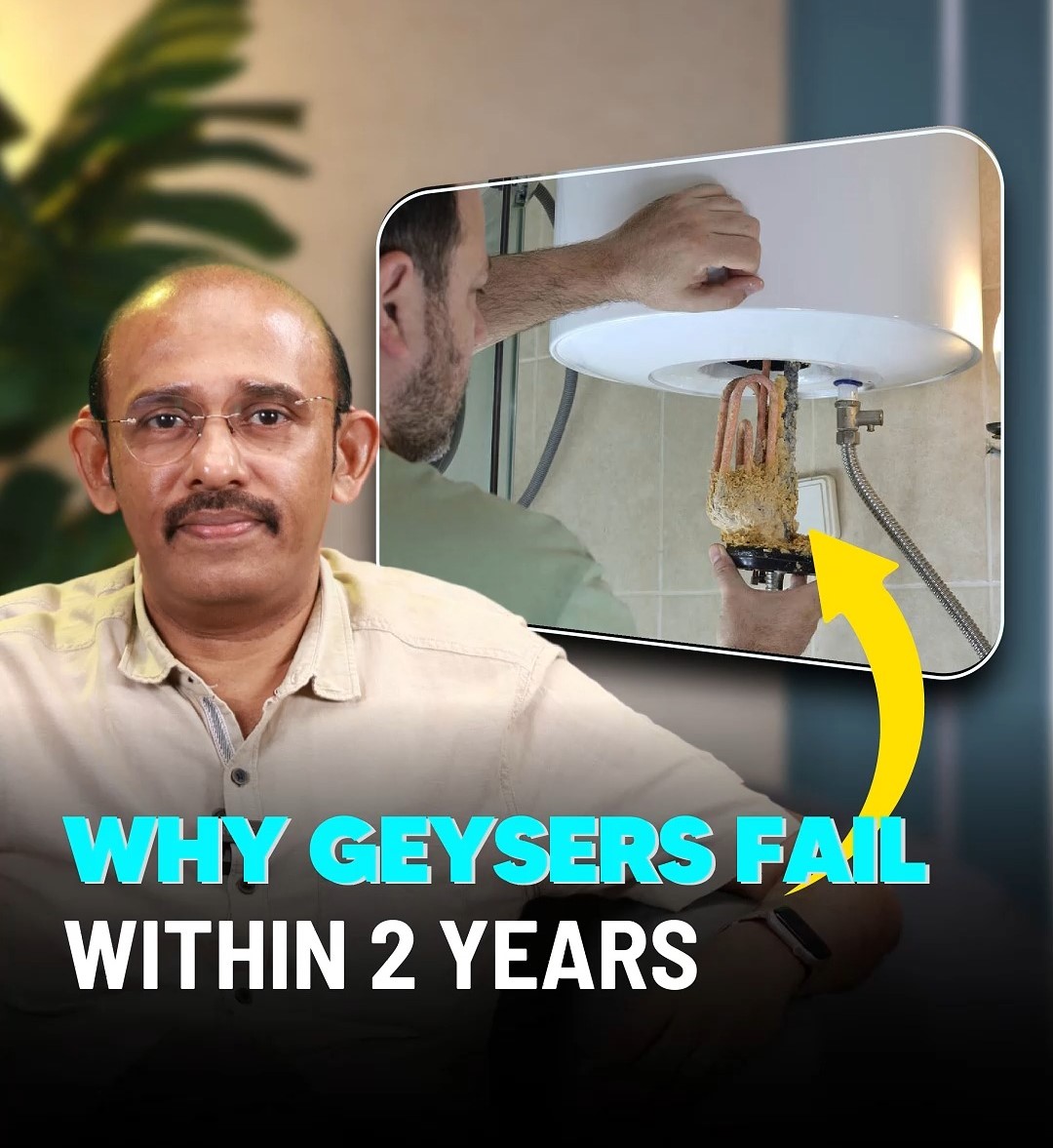
If you were to cut open a failed water heater operating under poor water conditions, the internal damage would be immediately clear. Over months of continuous use, a thick white crust forms directly over the internal components. This crust is a heavy accumulation of calcium and salt deposits that naturally precipitate out of the water supply during the heating cycle.
If you were to open a geyser that has been operating with hard water for several years, you would likely find thick layers of white, chalk-like deposits coating the internal tank and heating element.
These deposits are made up of calcium carbonate and other mineral salts that have accumulated over thousands of heating cycles.
The buildup may seem harmless at first, but it creates serious problems inside the appliance.
The Destruction of the Heating Element
The heating element is the heart of any geyser. When heavy calcium layers wrap around this element, they act as a thermal barrier. Instead of directly transferring heat to the surrounding water, the element becomes trapped inside an insulated shell of rock-hard scale, causing it to overheat and burn out rapidly.
The heating element is responsible for warming the water inside the tank.
When hard water minerals accumulate around the element, they create an insulating barrier between the element and the water.
As a result:
- The element must work harder to heat the water.
- Energy consumption increases.
- Heating becomes slower and less efficient.
- The element overheats.
- Premature burnout occurs.
Many homeowners end up replacing the heating element repeatedly without realizing that hard water is causing the failure.
Why Simple Repairs and Part Replacements Fail
When a geyser stops heating, a common response is to call a technician to service the unit or replace the burnt-out heating element. While a new element will temporarily restore hot water, it does nothing to fix the problem’s source. Within another year or two, the exact same scale buildup will return, forcing you into a cycle of repeated, expensive repairs.
When a geyser stops working, many homeowners call a technician to replace the heating element or thermostat. While these repairs may temporarily restore operation, they do not address the root cause. If hard water continues entering the system, mineral deposits will begin forming again immediately.
Within another year or two, the same problems often return:
- Burnt heating elements.
- Reduced heating efficiency.
- Increased electricity consumption.
- Frequent service calls.
- Premature appliance replacement.
This creates an expensive cycle of ongoing repairs that could have been prevented through proper water treatment.
The Critical Need for Professional Water Testing
Before spending more money on replacement appliances or ongoing plumbing repairs, you must determine what is actually in your water. Conducting a proper water quality test allows you to identify exactly what parameters are destroying your appliances:
- Total Hardness Levels: Measured to see the exact concentration of calcium and magnesium minerals. Hardness testing measures the concentration of calcium and magnesium minerals in the water. Higher hardness levels generally mean a greater risk of scale formation.
- Iron Content: Checked to prevent staining and accelerated internal rusting of metal tanks.
A professional water quality test can identify the contaminants and mineral levels responsible for appliance damage.
How to Effectively Treat Your Supply and Protect Your Home
The only permanent way to prevent scale from destroying your bathroom appliances is to treat the water before it ever enters your plumbing system. Implementing a proper water treatment solution eliminates mineral accumulation entirely.
Raw Water Source ➔ Water Hardness Testing ➔ Whole-house RO ➔ Water Softener
Choosing the Right Hard Water Solution for Your Plumbing
The hidden threat of boiling is directly linked to Total Dissolved Solids (TDS), which measures the combined total of organic and inorganic substances dissolved in a liquid.
Solution Type | How It Works | Best For | Long-term Benefits |
Resin Softeners | Exchanges calcium/magnesium ions with sodium | Whole-house plumbing protection | Eliminates scale completely, extends appliance lifespan |
Take Control of Your Water Quality Today
If your home’s geyser is breaking down frequently and you suspect that hard water scale is the primary culprit, it is time to stop guessing. Investigating your specific water quality will save you thousands in appliance replacements.