
Why Mini RO Plants Fail in Schools, Hospitals & Hotels - The Smart Way to Choose a Commercial RO System
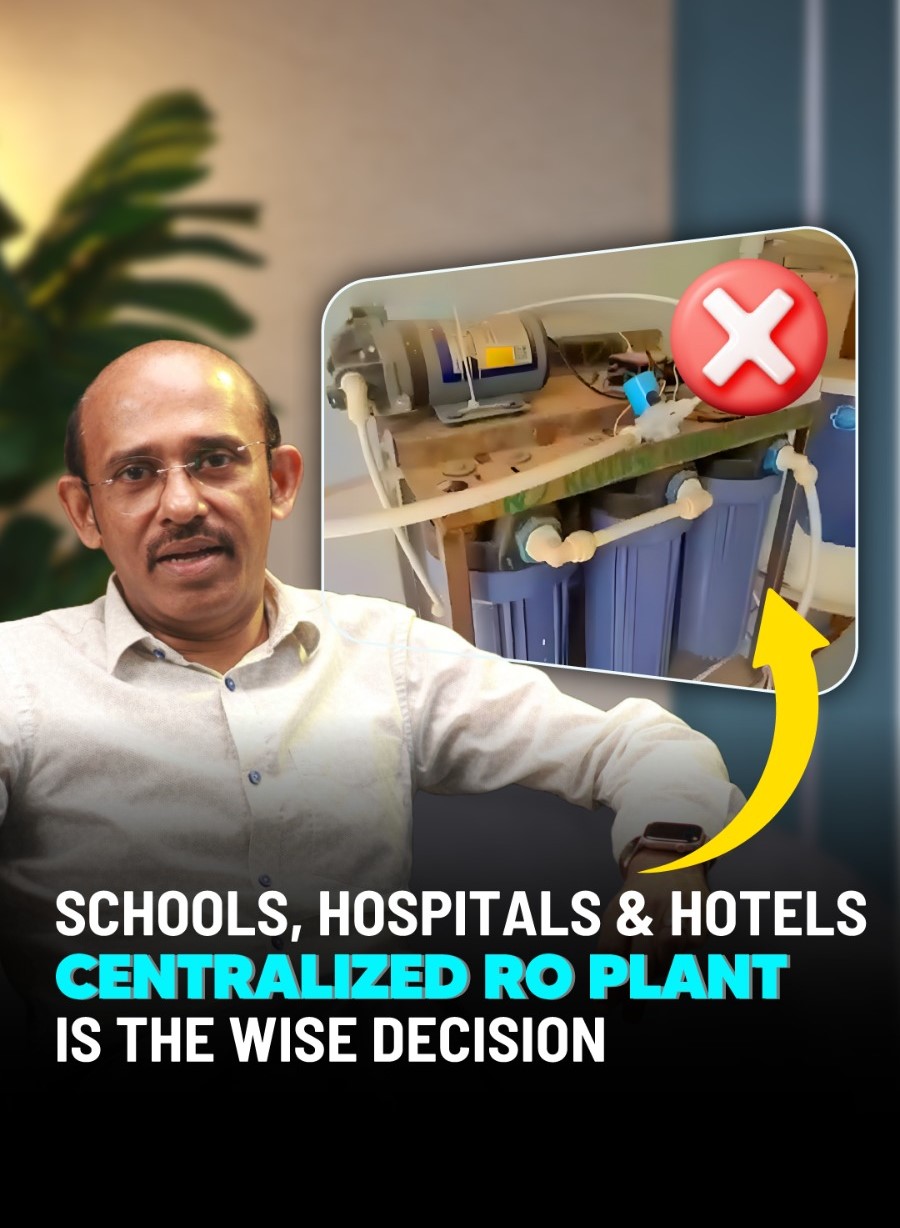
If you visit many schools, hospitals, or hotels, you will often see a small RO unit kept in a corner. It may be rusted, poorly maintained, and rarely used. After some time, the management stops trusting the system and starts buying water cans instead.
The problem is not the RO technology. The real problem is choosing the wrong system. A mini RO plant designed for a house cannot meet the heavy, continuous water demand of large institutions. When the capacity and usage do not match, the system often breaks down and becomes difficult to maintain. The solution is simple: choose the right commercial-grade RO plant from the beginning.
Buying Water Cans Every Month? The Real Cost of a Wrong RO Choice
Buying water cans may look like an easy solution when an RO system fails. However, if you calculate the monthly and annual costs, it becomes very expensive. Many institutions end up spending lakhs of rupees over time.
There are also other issues, such as storage space, delivery delays, and hygiene concerns. Choosing the wrong RO plant does not just waste money once; it creates ongoing monthly expenses.
Name-Sake Installations: When an RO Plant Is Installed Just for Show
In many places, RO plants are installed just to say, “We have a water purifier.” There is no proper water testing, no study of daily water usage, and no planning for the future. As a result, the system soon stops functioning properly. Filters clog, membranes fail, and maintenance is neglected. An RO plant should be a reliable system that operates daily, not merely installed for formality.
Why a Home RO System Cannot Serve a School or Hospital
Using a home RO system in a school or hospital is like using a bike for a school trip instead of a bus. A home RO is designed for a single family and has limited daily use. But schools, hospitals, and hotels need water for hundreds of people every day. The storage, pressure, and output of a home system are insufficient to meet such a demand. When overused, it breaks down quickly and gives less water.
Capacity Calculation: The First Step Before Choosing a Commercial RO Plant
Before buying an RO plant, you must first calculate the water required.
How many students are in the school?
How many patients, staff, and visitors come to the hospital daily?
How many rooms or tables does the hotel have?
Without this information, choosing an RO plant becomes guesswork. Proper planning helps the system handle peak demand without stress.
How to Calculate Water Consumption for Schools, Hospitals & Hotels
For schools, count the number of students and staff. Include water needed for drinking and cooking. For hospitals, include patients, attendants, doctors, nurses, and other staff. Also consider the water used in the pantry and other areas. For hotels, count the number of rooms, restaurant tables, and average occupancy. Based on daily usage per person, you can decide the correct litres per hour (LPH) capacity. This prevents buying a system that is too small or too large.
Centralized RO vs Small Corner Units: What Works Better?
Instead of installing many small RO units on each floor, a centralized commercial RO plant works better.
A single large system is easier to maintain and delivers consistent water quality throughout. Small units often receive irregular service and perform differently. A centralized system gives better control, easy monitoring, and long-term reliability
Terrace Installation, Storage Tanks & Floor-Wise Distribution Planning
In many institutions, commercial RO plants are installed on the terrace. The purified water is stored in a separate 500–1000 litre tank, often made of stainless steel. From there, pipelines are laid to each floor with proper dispensing points. This setup keeps the system neat and organized. Maintenance becomes simpler because everything is managed from a single location.
The Smart Investment: Choosing the Right Commercial-Grade RO System
Selecting the right commercial RO system based on accurate capacity calculations is a smart, long-term decision. It reduces the need to buy water cans, saves money, and ensures safe drinking water for everyone. Just as choosing the right vehicle for a journey is essential, institutions must select the right RO plant for their size and needs. When properly planned and installed, a commercial RO plant becomes a reliable, cost-effective solution for many years.