
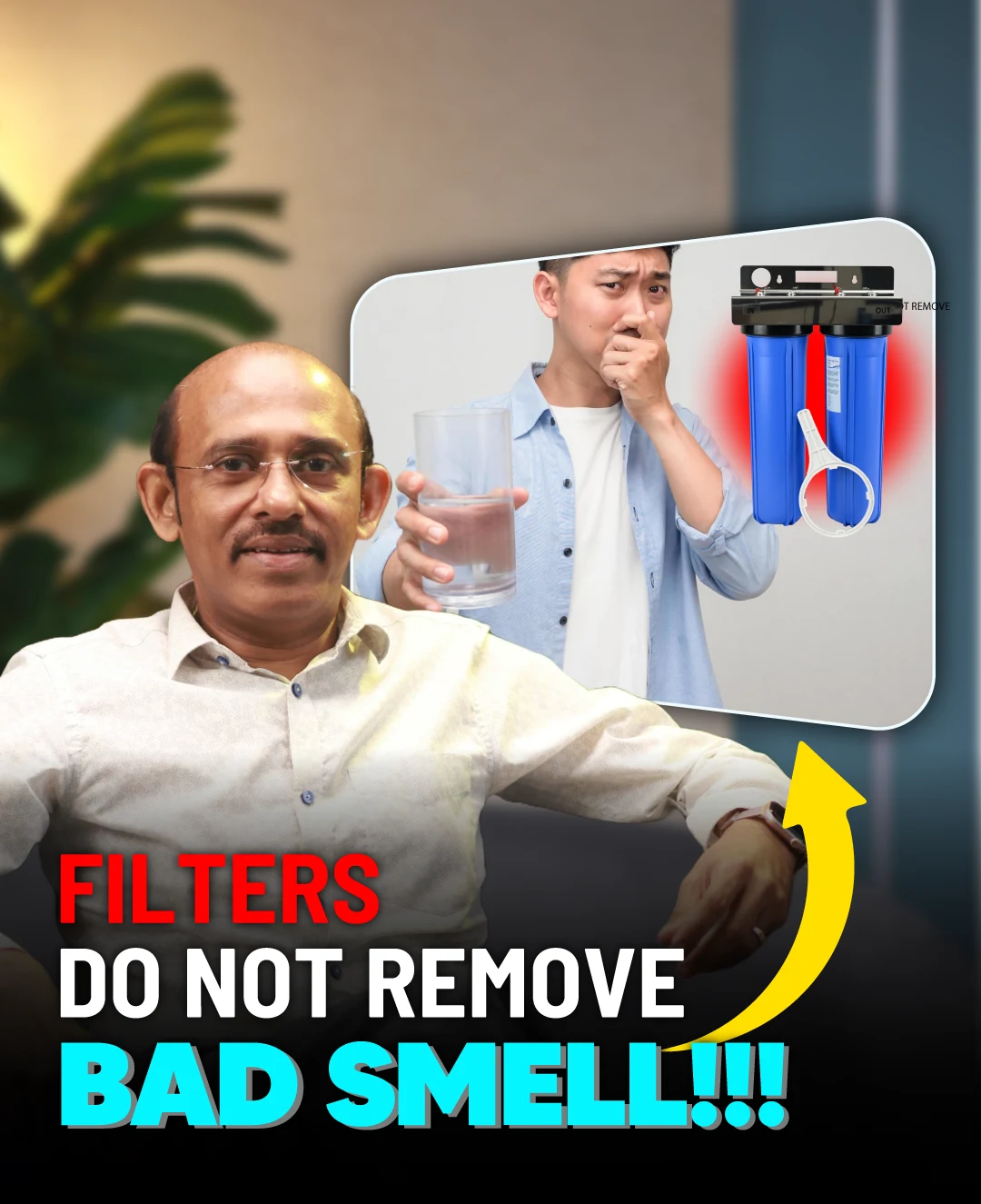
Why Installing Only a Water Filter Is a Big Mistake | The Truth About Smelly & Contaminated Water
Many homeowners believe installing a water filter will solve every water problem, like putting a bandage on a wound and expecting it to heal overnight. But when your water has a foul odour or hidden contamination, filtration alone is not the solution. It’s like spraying room freshener in a house with a drainage leak; the smell might vary, but the problem persists.
A common water filter is meant to filter out visible contaminants, sand, dirt, and rust, just like a sieve separates stones from rice. Some high-tech filters can remove chlorine or trace contaminants. But when it comes to active bacterial contamination or sewage intrusion, a filter is simply not enough. It can trap particles, but it cannot prevent living organisms from multiplying in your water system.
If your water smells bad, the problem is biological, not just physical. Odour is often a warning sign, like smoke rising before you see the fire. Putting a filter in place without removing the bacteria first is like locking your front door but leaving your back door wide open. The problem is still growing in your tank and in your pipes. It’s quietly multiplying. The problem isn’t going to get better; it’s going to get worse, and what started out as a small problem is now a bigger problem.
What a Bad Smell in Water Really Means: Signs of Bacterial Contamination
If your water smells like rotten eggs, sewage, or a damp, musty odour, it is not only a problem to address but also likely indicative of bacterial growth. Anaerobic bacteria, which thrive in low-oxygen environments, are usually the primary cause of the problem. When water stagnates in tanks or pipelines without proper aeration, it creates a favourable environment for these microorganisms. As they multiply, they release gases such as hydrogen sulfide, which produces that strong, foul odour many people notice from their taps.
In some cases, the problem can go beyond simple stagnation. Sewage can become contaminated due to broken pipes, septic systems, or groundwater. The odour is not only a problem; it is also a sign of biologically unhealthy water. Ignoring the odor is like ignoring the smoke before a fire. The problem will not solve itself. The cause of the problem must be identified and addressed to restore healthy, clean, odourless water.
The Common Mistake Companies Make When Recommending Only Filters
Many businesses also recommend installing a water filter as an immediate solution because it is easy to understand, easy to set up, and more cost-effective in the long run. From a marketing standpoint, it is indeed the best solution ever. However, if the real issue is bacterial growth or sewage leakage, a water filter merely treats the symptoms. It is addressing what is visible but not what is occurring beneath the surface. It is as if one were painting the wall without addressing the moisture that is causing it to deteriorate in the background.
Without actual testing and analysis, installing a water filter is merely a band-aid. The customer may be satisfied with the solution, believing the problem has been resolved, especially if the water appears cleaner. Nevertheless, the bacteria remain a problem, thriving in the tank and pipes. Instead, what initially seemed like a cost-effective solution may become a costly problem. Ultimately, what seemed like a cost-saving decision may result in recurring expenses and greater complications.
Why Water Testing Is the First and Most Important Step
Before installing any treatment system, water must be tested in a certified laboratory. Testing identifies:
- Bacterial presence
- Sewage contamination levels
- Chemical parameters
- TDS and other impurities
If sewage or bacterial contamination is below 5%, treatment is usually possible. But the treatment plan must be based on real data, not assumptions. Proper testing ensures the right solution is selected.
Understanding Sewage Contamination: When Is Treatment Possible?
Sewage contamination does not occur suddenly without a cause. It may occur due to broken or damaged pipes, septic tank leakage in the vicinity, or groundwater contamination from waste sources, especially in older infrastructure. At times, contamination may be slight and gradual; at other times, it may be serious and alarming. The level of contamination is a key factor in determining whether the water can be treated or the water source itself requires repair.
If the level of contamination, as indicated by the laboratory results, is within manageable levels, usually below 5%, then a well-designed treatment process can restore the water to safe levels. However, if contamination is severe, installing a treatment process alone will not be effective; the cause must be removed before purification can function properly. Neglecting sewage contamination and merely installing a filter is like pouring perfume in a room where there is a leak in the drainage system; the odor may temporarily disappear, but the problem will continue to spread.
The Role of Aeration: Stopping Anaerobic Bacteria at the Source
Aeration is the first important step in the treatment of odor-filled water. Anaerobic bacteria grow in low-oxygen conditions. Adding air to the water upsets the water’s favourable environment for growth.
Aeration helps in:
- Removing unpleasant smell
- Releasing the trapped gases
- Enhancing the quality of the water
- Preparing the water for proper disinfection
- Bacteria will continue to multiply in untreated water, making filtration inefficient.
Chlorination vs. Ozonation (O₃): Which Disinfection Method Works Better?
Once aeration is completed and oxygen has been introduced into the water, the next critical step is disinfection. Aeration helps control bacterial growth conditions, but it does not completely eliminate microorganisms. To make the water biologically safe, active bacteria and pathogens must be destroyed. This is where proper disinfection becomes essential in the treatment process.
Chlorination is one of the most commonly used and cost-effective disinfection methods. When used at the appropriate dose, it effectively kills bacteria and controls contamination. However, if not properly monitored, it can leave a residual taste or slight odour in the water.
Ozonation (O₃), by contrast, is a more advanced and powerful technology. Ozone is highly effective at destroying bacteria, viruses, and odour-causing agents without leaving harmful chemical residues. This is particularly useful in situations where the contamination is severe. The final decision between chlorination and ozonation should always be made after seeing the water test results.
Why You Cannot Skip Aeration and Go Directly to Filtration
Many people ask, “Why not just install a filter and UV system and finish the job?” It sounds logical, like locking your doors and windows and assuming your home is completely secure. But water treatment doesn’t work that way. Filtration is designed to catch visible particles, much like a sieve separates sand from rice. It handles what you can see. Biological contamination, however, is invisible and alive. If bacteria are already active in the water source, skipping aeration and proper disinfection is like trimming weeds without pulling out their roots; they will simply grow back, often stronger than before.
When bacteria are not eliminated at the source, they continue to multiply in tanks and pipelines, quietly spreading through the system. In such cases, filters end up carrying the burden of a problem they were never meant to solve. They clog faster, lose efficiency, and may fail prematurely, like a mask trying to stop a storm. The treatment sequence is not optional; it’s essential. Aeration prepares the water, disinfection neutralizes the threat, and only then does filtration polish and refine it. When the order is wrong, the entire system suffers. When the order is wrong, the entire system suffers.
The Correct Step-by-Step Water Treatment Process for Safe, Odour-Free Water
To properly treat smelly or contaminated water, follow this structured approach:
- Laboratory Water Testing
- Aeration to introduce oxygen and remove gases
- Disinfection (Chlorination or Ozonation)
- Filtration to remove suspended particles
- Final polishing treatment if required
When done correctly, this process eliminates odour, kills harmful bacteria, and ensures safe, clean water throughout your home or commercial space.