
How a Water Softener Works and Why Salt Still Remains
Hair fall, white stains on bathroom tiles, and rough-feeling water are issues almost every household experiences. According to Mr Manohar DM, these are not cosmetic problems but clear signs of underlying water quality issues that need attention. Such problems are usually caused by hard water, where excess minerals like calcium and magnesium are present in high concentrations and continuously affect daily water usage.
Mr Manohar DM further explains that when these minerals interact with soaps and detergents, they reduce cleansing efficiency and leave behind residue on skin, hair, and surfaces. This leads to dryness, increased hair fall, dull-looking bathrooms, and faster wear and tear of plumbing fixtures. Over time, untreated water quality issues can lead to higher maintenance costs and discomfort, making it essential to test and address the water at the source rather than repeatedly treating the visible symptoms.
Why Water Softeners Are the First Choice for Many
To remove hard water, homemakers prioritise installing a water softener. Though it is effective in eliminating apparent problems, according to Mr Manohar DM, familiar people misunderstand what a water softener is and how it works. The common perception is that installing a water softener will eliminate all water-related problems, regardless of the water’s quality.
However, as noted by Mr Manohar DM, a water softener is specifically designed to counter calcium and magnesium scale but cannot remove all dissolved solids from the water. This means that problems such as high TDS values or salt could still be present in the water even after softening. Understanding this distinction is crucial, as choosing the wrong treatment system without proper water testing can lead to incomplete results and continued problems inside the home.
The Biggest Myth: “Water Softeners Remove Salt”
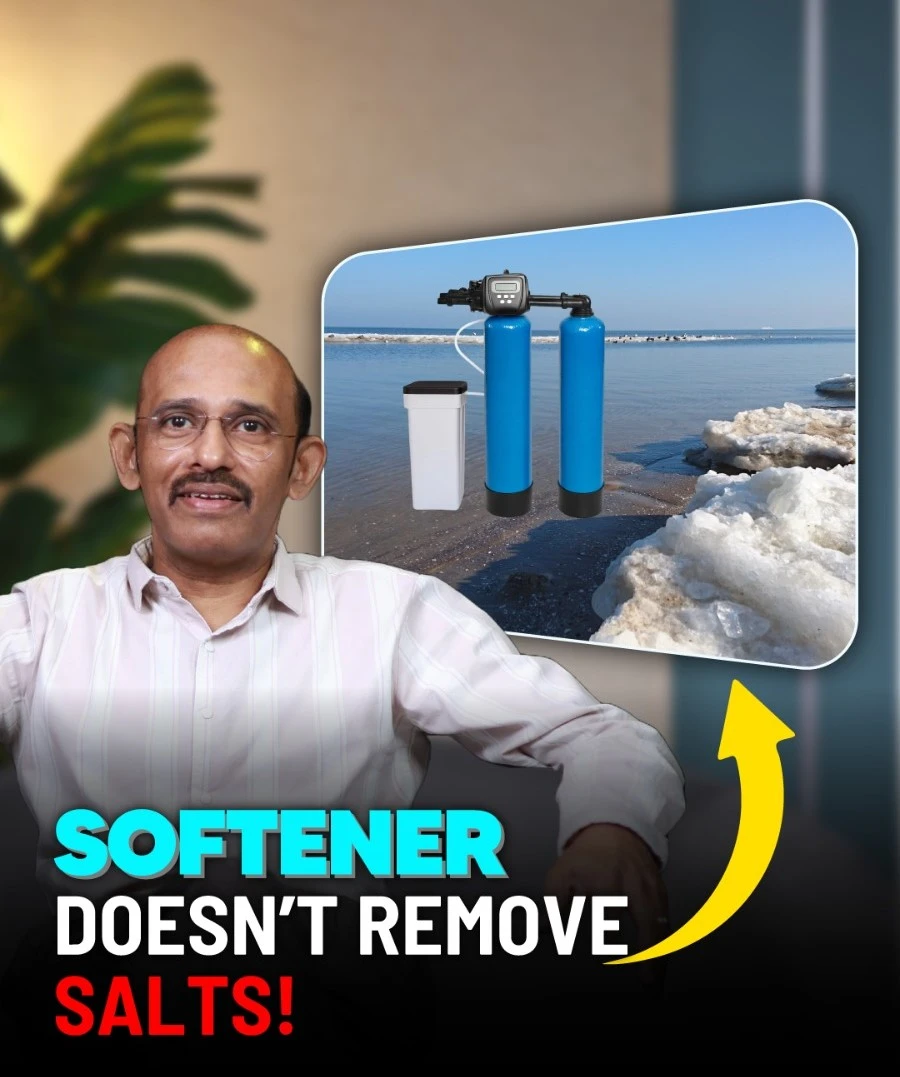
One of the most common misconceptions is that water softeners remove salt from water. Mr Manohar DM clearly states that this is entirely false. A water softener does not remove salt from water. This misunderstanding often leads homeowners to believe that softened water is free from sodium or total dissolved salts, which is not the case.
Mr Manohar, DM, explains that salt is used only during regeneration to recharge the resin inside the softener. This mechanism of action exchanges calcium and magnesium ions for sodium ions, removing water hardness but leaving the actual salt content in the water. Since sodium does not cause a visible white stain, the water now appears cleaner, even though this creates an illusion that the salt has been removed when it actually has not.
The Real Culprit: Calcium and Magnesium
Tough water contains two challenging minerals: calcium and magnesium. These two minerals evaporate, leaving a paste-like residue on bathroom tiles, faucets, and fixtures that forms tough stains that are difficult to remove. Despite frequent cleaning and effective cleaning agents, these stains tend to reappear with a vengeance, causing bath areas to lose that sparkle and freshness that makes them look clean.
Over time, the deposits of these minerals not only affect aesthetics but may also damage plumbing and surfaces. According to Mr Manohar DM, the minerals may cause blockages in the shower head, reduce water flow, and shorten the life of plumbing and appliances.
Hence, the effective way to eliminate the regular trouble caused by stains is to address the root of the problem by providing appropriate water treatment solutions.
How a Water Softener Actually Works
The mechanism of the water softener involves a procedure called ion exchange. The substance, or resin, in the water softener is resaturated with a sodium-rich saltwater solution during regeneration. The sodium ions present in the saltwater solution push the calcium and magnesium ions present in the raw water into wastewater. The process of ion replacement results in a reduction in the hardness of raw water. Scales cannot form on surfaces or lines in water plumbing due to a decrease in raw water hardness.
As stated by Mr Manohar DM, the function of water softeners improves the efficiency of soap, resulting in effective rinsing and lathering in shampoos and soap products. As a result, consumers achieve smooth skin, reduced hair dryness, and clean bathrooms. However, one should know that although the hardness of the water is reduced, the dissolved solids remain unchanged.
Why Bathrooms Look Cleaner After Softening
Even though salt is still present in the water, sodium ions do not leave white stains. This is why bathrooms appear cleaner and scale buildup reduces, giving the impression that salts have been removed. Since there is no visible residue on tiles, taps, or shower fittings, many homeowners assume the water is entirely free of salts.
Mr Manohar, DM, clarifies that this visual improvement can be misleading if the water quality is misinterpreted. While the absence of stains makes maintenance easier, the dissolved salts remain in the water and may not be suitable for all household or drinking purposes. This is why identifying the proper treatment solution through water testing is essential, rather than relying solely on surface-level results.
No Change in TDS Levels – Here’s Why
One key point highlighted by Mr Manohar DM is that a water softener does not reduce the TDS (Total Dissolved Solids) content. What this implies is that if the TDS level of the water you are using now is 1500 ppm, after installing the water softener, the level would also remain 1500 ppm because the dissolved material is not removed; it is replaced. The materials that cause hardness would be replaced with sodium ions to ensure the concentration of the dissolved material does not increase or decrease.
Furthermore, he states that one must not consider a water softener to be similar to purification methods such as RO. In fact, that is precisely why a household with high TDS levels, whether it be salty taste, health issues, or appliance damage, may require more than just a water softener. This is where proper analysis comes in to determine whether a softener is what you need or something more.
When a Water Softener Is Not Enough
The conditioner will work only up to a certain level of hardness, i.e., not exceeding 600 ppm. For values exceeding this level, Mr Manohar, DM, recommends installing an RO whole-house plant. This is because, beyond a certain hardness level, the conditioner may not work effectively.
He also declares that the wholehouse RO system is designed to get rid of too much dissolved solids material, such as calcium, magnesium, and contaminants; therefore, its usability is more suited for complex or high TDS water conditions. By treating water at the point of entry, such systems protect plumbing, appliances, and fixtures throughout the home, while also improving overall water quality and long-term reliability.
Test First, Then Choose the Right Solution
The most critical step is always water testing and analysis before installing any treatment system. This is where Hydrodoc Plus comes in. The Hydrodoc Plus team, guided by expert insights from Mr Manohar DM, helps identify the exact water problem and provides the right solution, whether it’s a water softener, whole-house RO, or a customized treatment system.
Mr Manohar DM emphasizes that every household’s water composition is unique, and a one-size-fits-all approach rarely works. Hydrodoc Plus, after testing and evaluation, is not only designed to ensure the prescribed solution removes white spots and improves rough water, among other things, but also to remove impurities such as TDS, minerals, and other contaminants when present in high concentrations in the water. It is the ability to use science and customized remedies to make purified and safe drinking water for all members of the household, and this sets Hydrodoc Plus apart from other products in the market.