
The Invisible Poison: Why You Must Test Your Borewell Water for Heavy Metals
When you open your kitchen tap to pour a glass of cold water, you likely assume it is completely safe to drink. If your household water supply relies on a deep groundwater source—such as a personal borewell or a deep storage well—there may be a toxic threat lurking completely out of sight. In the natural world, balance is everywhere. Among animals, there are poisonous snakes and non-poisonous snakes.
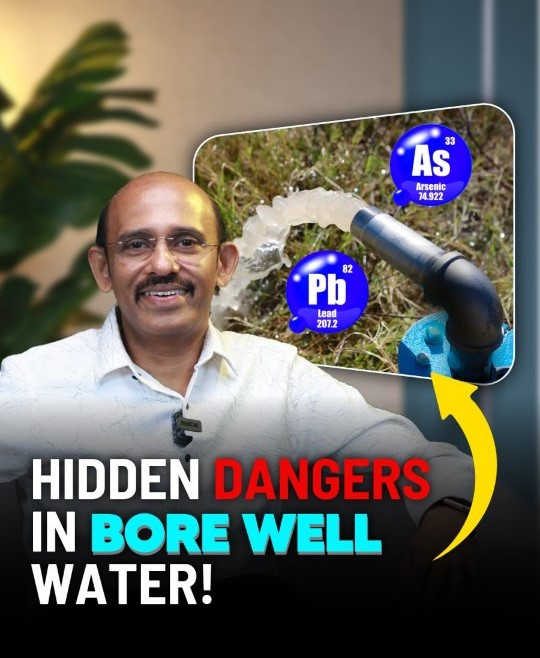
In botany, we find poisonous flowers alongside harmless blossoms. Even seeds are divided into toxic varieties and non-toxic varieties. Nature naturally hosts a strict duality of the good and the bad. This exact environmental rule applies directly to the soil beneath our feet. When you dig a deep bore or excavate a structural well, there is a very high likelihood of intercepting toxic heavy metals directly in the water supply. Understanding how these toxic compounds enter your drinking water, tracking their severe health implications, and deploying targeted, multi-stage filtration solutions are essential to securing a clean domestic supply.
The Environmental Paths of Heavy Metal Seepage
Heavy metals find their way into your domestic well or borewell system through two primary routes: environmental leaching and industrial pollution
Natural Soil Leaching
Even deep, rich soil structures that appear excellent for agriculture carry raw mineral deposits of heavy elements. Naturally, when water moves through nutrient-rich soil over long periods, it dissolves underlying components that contain toxic elements such as lead, chromium, and arsenic. This contaminated water pools inside underground aquifers, which are then tapped by residential deep borewells.
Industrial Waste Disposal
Human-driven industrial practices heavily accelerate this contamination process. When factories discharge raw, chemical-laden wastewater directly onto the ground surface or into unlined drainage channels, it alters the nearby soil ecosystem. This chemical waste gradually migrates downward through layers of rock and gravel, contaminating your deep well or residential bore water supplies. This runoff systematically introduces elements like arsenic and lead directly into the domestic water supply.
The Chemistry of Heavy Metals and Their Specific Health Hazards
Unlike bacterial threats, heavy metal ions do not cause immediate symptoms. Instead, they accumulate inside vital organs over time, causing systemic cellular damage.
| Heavy Metal Contaminant | Core Industrial Origins | Acute & Chronic Medical Symptoms |
| Lead (Pb) | Natural geomorphic deposits, manufacturing runoff, old plumbing | Learning disabilities in children, cognitive delays, nervous system issues |
| Chromium (Cr) | Electroplating factories, industrial dye systems, metallurgical waste | Severe skin irritation, respiratory distress, chronic digestive tract issues. |
| Arsenic (As) | Mining operations, chemical waste seepage, deep mineral bedrock | Continuous vomiting, persistent diarrhoea, severe skin hyperpigmentation [ |
The Cognitive Impacts of Lead Pollution
If there is a significant volume of dissolved lead inside the water network, consuming it creates severe health complications. Lead works as a powerful neurotoxin that directly damages neural networks. In growing children, this can manifest as permanent learning disabilities, reduced behavioural control, and stunted cognitive development.
Chromium Exposure and Tissue Breakdown
When chromium concentrations rise above safe thresholds, it triggers localised tissue irritation. Regular exposure can cause stubborn skin rashes, lesions, and ongoing respiratory issues. Once ingested, it irritates internal linings, leading to chronic digestive problems and internal inflammation.
The Internal Impact of Chronic Arsenic Ingestion
Arsenic acts as a metabolic poison. Drinking arsenic-rich water over extended periods can lead to sudden vomiting, chronic diarrhea, and widespread dark spots or hyper-pigmentation across the skin
Carcinogenic Trends and Cellular Mutation
Beyond immediate physiological irritation, heavy metal groups present long-term carcinogenic properties. These compounds interfere with cellular reproduction and can cause gene mutations. This internal mutation process significantly increases the risk of malignant tumours and inheritable genetic abnormalities.
Deep-Diving Into Water Softening & Advanced RO Filtration
[Small Workshop Units] ➔ [Untreated Chromium Wash Fluids] ➔ [Ground Surface Discharge] ➔ [Aquifer Seepage]
When dealing with heavy groundwater contamination, a single-stage solution is rarely enough. To completely safeguard a home from a complex mix of minerals, hardness, and toxic heavy metals, it helps to understand how different water treatment technologies stack up against one another and how they can be combined into a multi-stage defense system.
The Multi-Barrier Filtration Approach
Using only a standalone Reverse Osmosis system on raw, heavy borewell water can rapidly clog or damage the delicate RO membranes. High concentrations of calcium, magnesium, and iron form a crusty layer on the membrane surface—a process known as “scaling”—which dramatically reduces the system’s efficiency and lifespan.
A proper domestic setup utilises a multi-barrier treatment train:
[Raw Borewell Water]
│
▼
[Dual-Media Sediment Filter] ➔ Removes sand, silt, mud, and turbid matter
│
▼
[Water Softener / Iron Remover] ➔ Exchanges hardness ions and precipitates dissolved iron
│
▼
[High-Pressure RO Membrane] ➔ Rejects microscopic heavy metals (Lead, Arsenic, Chromium)
│
▼
[Pure Drinking Water Storage]
By removing larger sediment and hardness minerals before the water reaches the heavy-metal extraction phase, you ensure the system operates at peak performance for years without constant parts replacements.
The Technology Shield: Selecting the Right Filtration System
Standard mesh screen filters, sand beds, and basic charcoal countertop filters are completely ineffective at stopping heavy metal ions. To pull dissolved metals out of your water supply, you need targeted filtration systems.
Industrial Grade Reverse Osmosis (RO) Systems
High-pressure Reverse Osmosis systems are the gold standard for removing heavy metals. These systems force raw water through a semi-permeable membrane with incredibly tiny pores (around 0.0001 microns). This dense physical barrier captures dissolved ions such as lead, arsenic, and chromium, flushing them out via a reject line while allowing only pure water molecules to pass into your home’s holding tanks.
Understanding TDS (Total Dissolved Solids) vs. Heavy Metals
A common misconception among homeowners is that a low TDS reading automatically means water is completely safe to drink. Total Dissolved Solids (TDS) measures the total volume of all inorganic salts (calcium, magnesium, chlorides, sulfates) dissolved in your water.
While a very high TDS usually indicates a high probability of contamination, a low or moderate TDS reading can be incredibly deceptive. Toxic heavy metals like lead or arsenic are dangerous in microscopic quantities—measured in parts per billion (ppb). A water sample can have an ideal, refreshing TDS level of 150 ppm while still containing toxic levels of arsenic that can cause long-term health complications.
The Testing Reality: Never rely solely on a basic handheld TDS meter to determine if your borewell water is safe. A true chemical analysis at an authorised laboratory is the only way to uncover hidden chemical toxins.
What is a “Whole-House” System vs. “Point-of-Use”?
When planning a water defense system for your home, you have to decide where the purification should take place:
1. Point-of-Use (POU) Systems
These are small, dedicated appliances installed right at a specific tap—such as an under-sink RO filter in the kitchen. While this guarantees safe water for drinking and cooking, it leaves the rest of your home unprotected. Toxic metals and hard water will still flow freely into your showers, washing machines, and bathroom sinks.
2. Point-of-Entry (POE) Whole-House Systems
A whole-house filtration plant is installed directly on your main water line where the borewell pipe enters the building. This means 100% of the water filling your storage tanks is pre-filtered, softened, and stripped of harmful compounds.
Choosing a comprehensive whole-house system protects your skin from harsh metals in the shower, prevents plumbing fixtures from developing unsightly stains, and extends the lifespan of expensive household appliances like water heaters and washing machines.